Encore Motorcars of Sarasota

Blog / Land Rover Repair

WARNING SIGNS OF INTAKE MANIFOLD GASKET FAILURE IN YOUR LAND ROVER

Land-Rover-Intake-Manifold-Gasket

Land Rovers are some of the most safe and efficient cars on the market, but if your intake manifold gasket is starting to fail, you might have a safety hazard on your hands.

Making sure your intake manifold gasket in your Land Rover is of utmost importance. If you notice that your gasket is no longer working properly, take it to Encore Motorcars at your earliest possible convenience.

Whether you are driving from BradentonEllentonNokomisOspreyParrishVeniceLakewood RanchLongboat KeySiesta KeyUniversity Park, or Sarasota, Florida, we at Encore Motorcars understand the importance of ensuring a safe and reliable vehicle.

The Purpose of Your Land Rover’s Intake Manifold Gasket

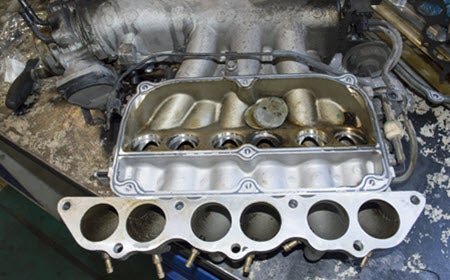
Your Land Rover relies heavily on the strength and health of your intake manifold gasket. Your vehicle’s intake manifold gasket is just one part of your Land Rover’s engine. Its purpose is to help stop any air from leaking out of the engine while it is ignited or running.

The manifold gasket assists in regulating your engine chamber’s temperature as well as makes sure that no gasolines explosions happen within your Land Rover’s engine. By pulling oxygen into the engine, it not only fuels the engine but also cools it. Your Land Rover’s intake manifold gasket is positioned just between your car’s cylinder heads and its intake pipe, making sure to keep your engine running and your car safe for both you and your family.

How to Know if Your Intake Manifold Gasket is Failing

Knowing whether your Land Rover is having intake manifold gasket failure is very important. This can give you an opportunity to address the problem as soon as possible by taking your vehicle to a certified Land Rover professional rather than waiting until additional issues arise. Some signs that your intake manifold gasket is failing include:

  • The engine is visibly leaking coolant: If your vehicle’s gasket is old, damaged, or worn out, you will start to notice a coolant leak. Your Land Rover’s coolant is stored by the gasket in a very pressurized chamber. If it begins to leak out, there will likely be corrosion and additional problems for your car.
  • Your fuel efficiency has reduced immensely: If you notice yourself filling up on gas more often than regular, you could have a problem with your intake manifold gasket in your Land Rover. A sudden decrease in fuel efficiency can mean that the ratio or air and fuel in your cylinder is unbalanced and must be corrected by a professional Land Rover repair specialist.
  • You are experiencing a bumpy idle or backfiring: If you are experiencing a bumpy ride when idling or the backfiring of your vehicle, bring it to Encore Motorcars where we can examine your car and diagnose your gasket problem.
  • Your engine is overheating: If your intake manifold gasket in your Land Rover is failing, this means your coolant could be leaking out. As coolant leaks from your car, the car begins to overheat significantly. If you notice your car is warmer than usual or the thermometer reading on your dashboard shows an overheating vehicle, we suggest having it towed to Encore Motorcars.

How to Avoid A Failing Intake Manifold Gasket in Your Land Rover

Knowing how to avoid and prevent the failure of your intake manifold gasket will greatly improve the lifespan of your Land Rover. In order to avoid gasket failure you should:

  • Get regular vehicle inspections at a licensed repair shop that specializes in the make and model of your car.
  • Keep your fluids, oils, and coolants always topped up.
  • Get regular oil changes.
  • Use the designated gas for your vehicle.
  • Make sure your car has enough antifreeze.

Encore Motorcars Can Diagnose and Repair Your Intake Manifold Gasket
At Encore Motorcars, we know how important your car’s reliability is to you. If you have a failing intake manifold gasket, come to Encore Motorcars where we can offer service with a smile.

As a leader in German, Exotic, and Asian Import cars, we’re committed to making maintenance easier and more convenient for you, so drivers can enjoy their luxury cars the way they were made to be.

Serving Bradenton, Ellenton, Nokomis, Osprey, Parrish, Venice, Lakewood Ranch, Longboat Key, Siesta Key, University Park, and Sarasota, Florida, we accept almost all warranty plans, offer free one-day rental cars, a free courtesy car wash, and the friendliest service in the West Florida area. Give us a call today to schedule your appointment.
Posted in:

Related Posts

Land-Rover-Accessory-Drive-Belt

HOW TO DEAL WITH LAND ROVER ACCESSORY DRIVE BELT FAILURE

The accessory drive belt in your Land Rover is very important and it is used to power most accessories in your car from your car’s alternator to the AC and many others. This belt is exposed to a lot of stress that can make it break or slack, thereby reducing or halting its ability to power your vehicle. Let’s dive into the signs of drive belt failure and what to do if you suspect it is happening to your Land Rover. What Makes the Drive Belt In Land Rover Fail Stop-and-Go Trips Your Land Rover is an off-road vehicle, meaning it is expected to perform excellently whether you drive on the open highway or other terrain. Now, when it comes to city driving, with its myriad of stop signs, traffic lights, and the never-ending start-and-stop routine, your Land Rover is forced to adjust from its marathon nature to being a sprinter, running one short trip to another. This kind of urban drive puts some strain on your accessory drive belt. When your Land Rover is subjected to these kinds of trips for a long time, the drive belt starts to wear. Heavy Lifting Ever used your SUV as a heavy-duty vehicle to cart around heavy loads? Well, your accessory drive belt feels that strain. Even though your Land Rover is built to drive on different terrains, it is not meant for lifting cargo. Using your SUV to transport cargo is like asking a weightlifter to freeze mid-lift – that intense, sustained pressure is what your belt endures with every hefty haul. An occasional heavy lift might not spell immediate disaster, but if you turn it into a regular gig, then you’re cutting your drive belt’s career short. Frequent Hard Accelerations Think about how fun it is to quickly speed up in your car, feeling that immediate whoosh of power. It’s exciting, right? But for your car, especially for the accessory drive belt, it’s like going from a calm walk to a full-on sprint in seconds. This belt, which keeps things like your air conditioning and alternator running, suddenly has to work much harder every time you decide to speed up really fast. Doing this a lot is kind of like making your car run sprints all day—it gets tired out much quicker. If you keep up this need for speed, you might find yourself needing a new belt way sooner than you thought. How To Deal With Failing Drive Belt Don’t Ignore When your Land Rover’s accessory drive belt starts making its presence known through high-pitched squeals or you suddenly find steering feels like a gym session, it’s the belt’s way of waving a big, red flag. Ignoring these auditory or physical cues is akin to pretending not to hear a pot boiling over on the stove — sooner or later, you’re going to have to deal with a mess. These signs are your cue to spring into action, not tomorrow, but now. Call A Professional Replacing your drive belt may seem simple, but it should be left for the professionals to handle. Certified mechanics have the experience, tools, and know-how to diagnose and remedy the issue swiftly, getting you back on the road with minimal fuss. Let Our Experts Give Your Land Rover The Care It Deserves Your Land Rovers deserves a treat at a five-star garage, every now and then. Welcome to Encore Motorcars, where we treat every Land Rover like the royalty it is. We have a team that isn’t just skilled but also specialized in the art and science of everything Land Rover. Our garage is fitted with the latest tools for these British beauties and you can be sure that our mechanic will diagnose and fix whatever challenges your off-road vehicle might throw our way. We’re located in the heart of Sarasota, FL, and our doors are open to Land Rover drivers not just from our immediate neighborhood but also from the nearby communities of Bradenton, Ellenton, Nokomis, Osprey, Parrish, Venice, Lakewood Ranch, Longboat Key, Siesta Key, and University Park, FL. It’s a rendezvous point for Land Rover enthusiasts who demand nothing but the best for their vehicles. Don’t let your Land Rover’s cries for attention go unanswered. Book an appointment with Encore Motorcars today, and let us give your vehicle the five-star treatment it deserves.

Red-Land-Rover-Car

INDICATIONS THAT IT’S TIME TO REPLACE YOUR LAND ROVER’S PCV VALVE

In the intricate world of automotive engineering, where precision and efficiency are paramount, it’s essential to pay attention to every component, no matter how small it may seem. One such component that often goes unnoticed but plays a pivotal role in the performance and longevity of Land Rover cars is the PCV ( Positive Crankcase Ventilation) valve. This seemingly unremarkable part serves a crucial purpose in maintaining the overall health of your Land Rover’s engine. What is a PCV Valve? Let’s start by unraveling the mystery of the PCV valve. PCV stands for Positive Crankcase Ventilation, and the PCV valve is a small yet integral component of your Land Rover’s engine system. Its primary role is to regulate the flow of gases between the crankcase, where engine oil resides, and the intake manifold. This seemingly simple function serves a multitude of purposes. The PCV valve ensures that harmful gases, such as blow-by gases and moisture, are effectively removed from the engine’s crankcase. By facilitating this process, the PCV valve helps maintain a balanced environment within the engine, preventing the accumulation of pressure and harmful contaminants. How to Identify PCV Valve Issues Identifying PCV valve issues requires vigilance. Some common symptoms of a failing PCV valve include: Rough idling Decreased fuel efficiency Oil leaks Increased exhaust emissions. In some instances, a malfunctioning PCV valve may trigger the check engine light on your Land Rover’s dashboard. To stay ahead of potential problems, it’s advisable to include PCV valve inspections as part of your routine maintenance schedule. Consult your Land Rover’s manual or seek guidance from a qualified technician to determine the correct replacement interval for your specific make and model. The Risks of a Faulty PCV Valve Now, let’s delve into the potential pain points associated with a malfunctioning PCV valve. When this unassuming component fails to perform its duties correctly, it disrupts the delicate equilibrium of gases within the engine. This disruption can lead to a domino effect of issues within your Land Rover. First and foremost, a faulty PCV valve can result in increased pressure within the crankcase. This pressure buildup can manifest as oil leaks, which not only create a mess but also compromise engine efficiency. Over time, this can lead to more severe engine damage, translating into significant repair costs. Furthermore, a malfunctioning PCV valve can affect your Land Rover’s emissions. Increased emissions could potentially lead to environmental concerns and even regulatory issues, depending on local emissions standards and regulations. It’s evident that the stakes are high when it comes to the PCV valve’s proper functioning. Reap the Benefits of a Timely Replacement Given the potential risks associated with a faulty PCV valve, timely replacement becomes paramount. Fortunately, there are significant advantages to embracing this proactive approach. Replacing your Land Rover’s PCV valve when necessary or as part of routine maintenance offers numerous benefits. Chief among them is the preservation of your engine’s health and longevity. A properly functioning PCV valve ensures efficient removal of contaminants from the engine, reducing wear and tear. Additionally, an optimally functioning PCV valve helps maintain the Land Rover’s fuel efficiency, which is not only advantageous for your wallet but also for the environment. By addressing PCV valve issues promptly, you can prevent costly engine repairs down the road, ultimately saving you time and money. Contact Us For Skilled Land Rover Repairs The PCV valve is a small yet mighty component within your Land Rover’s engine system. Its role in maintaining engine health, fuel efficiency, and emissions cannot be overstated. Recognizing the signs of a failing PCV valve and addressing the issue promptly is key to preserving your Land Rover’s performance and longevity. At Encore Motorcars, we specialize in Land Rover maintenance and are here to assist you with any PCV valve concerns. Contact us today for expert guidance and assistance in ensuring that your Land Rover continues to conquer the roads of Bradenton, Ellenton, Nokomis, Osprey, Parrish, Venice, Lakewood Ranch, Longboat Key, Siesta Key, University Park, and Sarasota, FL, with grace and reliability. Your Land Rover deserves nothing less than the best care, and we’re here to provide it. Don’t wait; reach out to us now for peace of mind and a smooth journey ahead.

Land-Rover-Suspension

THE IMPORTANCE OF FIXING YOUR LAND ROVER’S FAILED SUSPENSION STRUTS

Dealing with Land Rover’s failed suspension struts can be a challenging endeavor, but it’s a challenge worth taking on to ensure your Land Rover’s optimal performance and safety. You want to prevent your Land Rover’s suspension struts from becoming the weakest link. These struts play a major role in the suspension system of Land Rovers. They serve multiple functions that contribute to your SUV’s overall performance and ride quality. Let’s take a deeper look below. Absorbing Shock One of the primary functions of suspension struts is to absorb and dampen the shock and impact from road imperfections, such as potholes, bumps, and rough surfaces. As your SUV travels over uneven terrain, the struts compress and extend to cushion the ride. This absorption of shock helps provide a smoother and more comfortable ride for both the driver and passengers. Without properly functioning struts, your SUV would transmit these shocks directly to the chassis and occupants, resulting in a rough and uncomfortable experience. Maintaining Traction Suspension struts are crucial in maintaining tire contact with the road surface. When driving, your tires need to remain in constant contact with the road to ensure optimal traction. This is essential for stability, control, and safety. The struts help control the vertical motion of the wheels, preventing them from bouncing excessively. When struts fail or become worn out, they may no longer adequately support the vehicle’s weight, leading to issues that we’ll discuss below. How To Know When You Have Failed Suspension Struts Tipping While Turning When you notice your Land Rover leaning excessively to one side while turning, especially during sharp corners or maneuvers, it’s a clear sign of suspension strut issues. Failed struts can result in poor lateral stability, making your SUV feel unbalanced. Diving Front End While Braking When you apply the brakes and your Land Rover’s front end noticeably dips, it’s a sign of weakened or failed struts. Suspension struts help control weight transfer during braking, and when they’re not functioning correctly, the front end can plunge downward, compromising safety and comfort. Uneven Tire Wear One of the more subtle indicators of failed suspension struts is uneven tire wear. Failed struts can lead to irregular contact between the tires and the road, causing the tires to wear unevenly. This can be seen as differences in tread depth across the tire’s surface. If you notice uneven tire wear, it’s a good idea to have your suspension system inspected. Unusual Bouncing A clear sign of suspension strut issues is a bouncy or unsettled ride. If your Land Rover feels excessively bouncy, especially over uneven or rough terrain, the struts may not be effectively dampening the shocks from the road. Addressing Suspension Struts Issue Inspection: The first step is to have your Land Rover inspected by a qualified mechanic or technician who specializes in suspension systems. They will perform a thorough examination of your struts, looking for signs of wear, damage, or failure. This inspection will help you accurately assess the condition of your suspension struts. Replacement: If the inspection confirms that your suspension struts are failing, it’s advisable to replace them promptly. Depending on your preferences and budget, you can opt for high-quality aftermarket struts or genuine Land Rover parts. High-quality components often offer better durability and improved performance, ensuring a smoother and more controlled ride. Regular Maintenance: To prevent future suspension strut issues, follow the manufacturer’s recommended maintenance schedule for your Land Rover. Regular checks and maintenance tasks, such as lubrication and part replacements, as necessary, can extend the lifespan of your suspension components and help you avoid potential problems in the future. Restore Your Land Rover’s Smooth Rides With Quality Suspension Struts Repairs At Encore Motorcars, we are the leading full-service dealership in Sarasota, FL. Our team of ASE-certified mechanics is dedicated to providing you with a hassle-free experience when diagnosing and fixing suspension strut issues. And to make your experience even more convenient, we offer a free courtesy car wash with our services. Located in Sarasota, we proudly serve customers from Bradenton, Ellenton, Nokomis, Osprey, Parrish, Venice, Lakewood Ranch, Longboat Key, Siesta Key, and University Park. Give us a call now, and let us get your Land Rover back on the road.